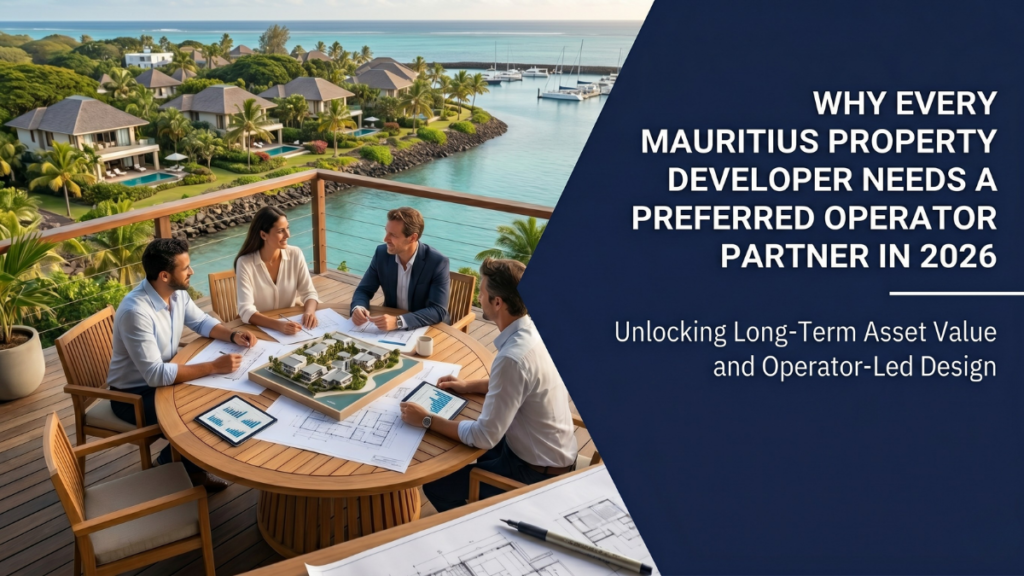
Why Every Mauritius Property Developer Needs a Preferred Operator Partner in 2026
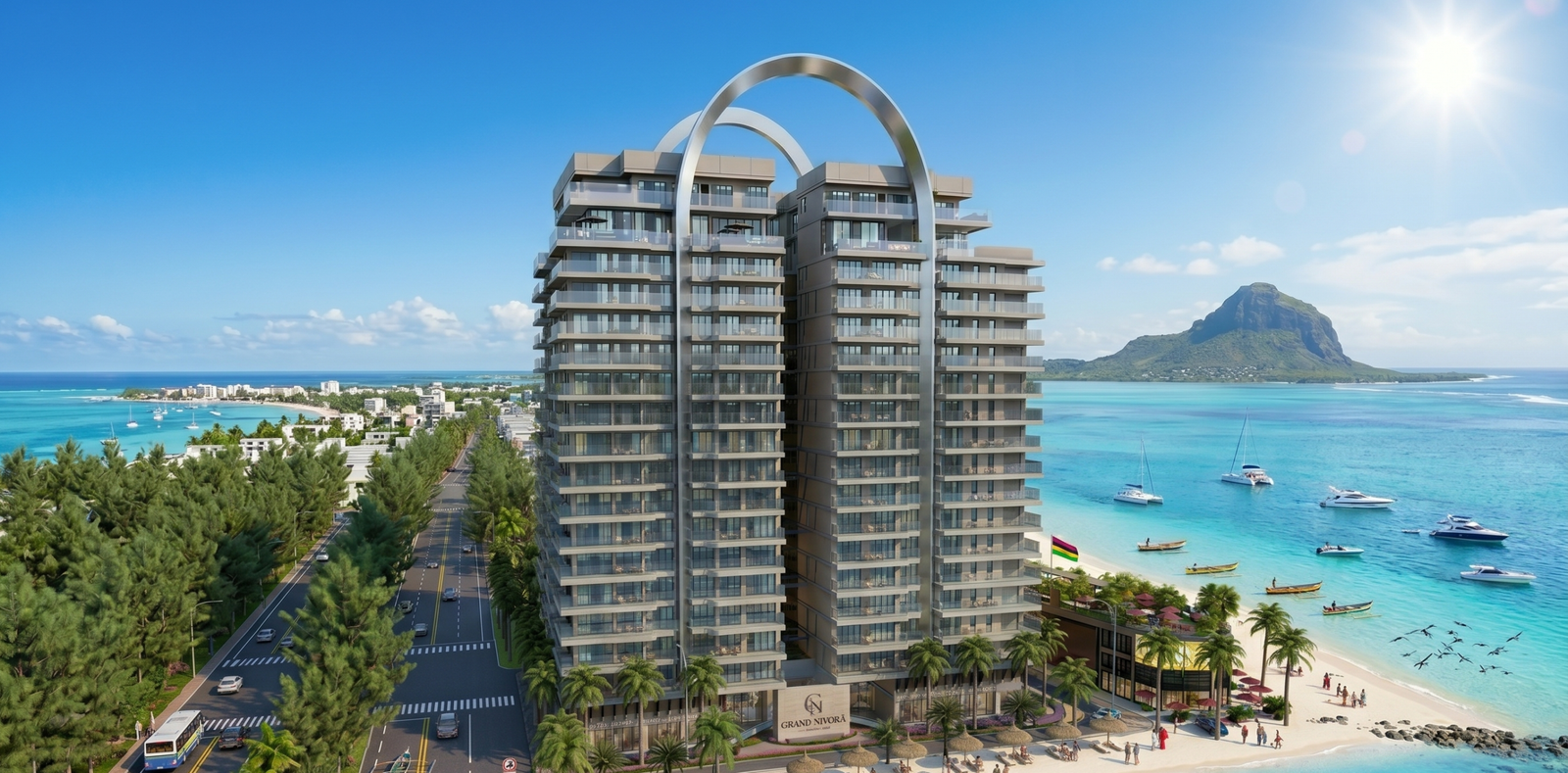
You’ve spent months securing land, navigating regulatory approval, coordinating with architects, and managing construction budgets. Your residential or mixed-use PDS project is on track. Units are pre-sold, buyers are excited, and the project is becoming real. But here’s the question most developers in Mauritius still get wrong: who will operate these units once they’re handed over to owners?
If you answer “the owners will figure it out themselves” or “we’ll offer optional management,” you’re leaving money on the table and giving your competitors a decisive advantage. In 2026, the market has shifted. Buyers – especially international investors – no longer want to gamble on rental performance.
They want certainty.
They want a partner with a track record, local expertise, and aligned incentives, and they’re willing to pay premium prices to get it.
A Preferred Operator Agreement (POA) with a credible, experienced management partner isn’t a commodity cost. It’s a value multiplier that accelerates sales, commands higher unit prices, reduces buyer acquisition costs, and transforms your project from a property sale into a hospitality-backed investment opportunity.
The Developer’s Dilemma: Building Units is Only Half the Battle
The property development cycle has fundamentally changed. Ten years ago, a developer could build a beautiful residential project, hand over keys, and move on. The units sold themselves because they were scarce and location was everything.
Today, scarcity is gone. Mauritius has matured as a property market. There are beautiful beachfront developments in almost every coastal region:
Cap Malheureux has competitors. Nord developments are getting busier.
The International buyers, who drive the demographic driving premium pricing in Mauritius, have options.
This shift creates what we call the developer’s dilemma: you can build exceptional units in exceptional locations, but you cannot guarantee the owner will achieve good rental returns or consistent occupancy.
A unit might sit empty for months.
An owner might struggle to market it internationally.
Seasonal demand might fluctuate unexpectedly.
A poorly managed property drags down the whole project’s reputation.
Here is the critical insight: if an international investor or a second-home buyer is uncertain about future rental income, they discount your asking price. They add a 15-25% “risk margin” to account for the uncertainty of managing a property thousands of kilometres away from their home country. That discount compounds across dozens or hundreds of units. It costs you millions.
Without an operating partner, you’re selling promises.
With one, you’re selling proof.
What a Preferred Operator Agreement Looks Like
A Preferred Operator Agreement is a contractual partnership between a property developer and a professional property management company. It grants the operator an exclusive (or semi-exclusive) right to manage rental units within a development, typically for a fixed term of 3-5 years with optional renewals.
Here’s the standard structure:
Fee Model
The operator typically charges a gross management fee calculated as a percentage of gross rental revenue. The market standard in Mauritius ranges from 15% to 25%, depending on the operator’s brand strength, occupancy track record, and the complexity of the property. Some operators also charge additional fees for marketing or operational expenses, but transparent, all-in fee structures are increasingly preferred by investors.
For example, First Grand Property Management operates on a 20% gross management fee plus VAT on a 5-year exclusive POA, with a right of first refusal for renewal.
This means if the property generates $100,000 in gross rental revenue in a year, the operator receives $20,000 plus the applicable VAT, and the owner receives $80,000 before financing costs, OTA fees and property taxes.
Term and Renewal
Most agreements run for 3-5 years, reflecting the time an operator needs to establish the property in the market, build guest networks, and achieve stable occupancy.
The operator typically receives a right of first refusal at the end of the initial term, meaning they have the first opportunity to renew under agreed-upon terms before the owner can seek alternative management.
Exclusivity and Reach
A robust POA grants the operator exclusive (or primary) marketing and distribution rights.
This is crucial.
It means the operator controls the distribution of the property appears on Airbnb, Booking.com (etc), their own website, and direct channels.
Owner vs. Operator Responsibilities
The developer (or future owner) is responsible for:
- Capital maintenance and repairs beyond normal wear and tear
- Property taxes and utility payments
- Insurance and legal compliance
- HOA or common area fees (if applicable)
The operator is responsible for:
- Day-to-day management and housekeeping
- Guest acquisition and marketing
- Revenue optimisation and dynamic pricing
- Guest communication and complaint resolution
- Maintaining occupancy targets and brand standards
How a POA Accelerates Unit Sales and Commands Premium Pricing
Now let’s talk about the commercial impact. A Preferred Operator Agreement doesn’t just make owners happier after the purchase, it fundamentally changes buyer behaviour during the pre-sale phase.
Buyer Confidence Removes Price Compression
When a buyer knows a professional hospitality operator will manage their investment, they remove the “management risk” discount. They’re no longer paying for uncertainty.
Instead, they’re paying for a concrete service backed by contractual guarantees, occupancy benchmarks, and professional expertise.
This alone can support a 10-20% price premium on units compared to competing projects without an operator.
Shorter Sales Cycles and Higher Conversion Rates
In our experience, projects with a signed POA convert considerably faster during pre-sales.
Why?
This is because the investor’s primary question of “how will I make money from this?” has a clear, credible answer.
Comparison shopping drops dramatically. Buyers move from the “research and compare” phase into the “how quickly can I purchase?” phase.
We’ve seen projects go from 12-18 month pre-sale windows to 6-9 month windows when a recognised operator is in place. That acceleration compounds when you’re launching units in bulk.
Foreign Investor Confidence and Scale
Buyers from France, the UK, South Africa, and Australia are increasingly selective about where they buy in Mauritius. They want established operators with local presence, systems, and relationships.
A POA with a credible management partner signals that your project is serious, professionally run, and designed for longevity. This appeal directly translates to higher conversion rates among the overseas demographic, which typically pays premium prices.
Easier Financing and Bank Appeal
Property investors seeking mortgage financing often encounter scepticism from lenders.
Banks worry about rental volatility and the investor’s ability to service debt from property income. A POA with documented occupancy guarantees or performance targets significantly improves a buyer’s financing proposition.
Banks view professionally managed properties as lower-risk collateral. Some buyers can access better loan terms, lower interest rates or higher LTV ratios purely because the property is backed by a recognised operator.
Grand Sahāna: A Case Study in Operator-Backed Development
The clearest proof of this model’s effectiveness is Grand Sahāna, our beachfront development in Mont Choisy, launched in 2025.
The Setup
Grand Sahāna was developed as a premium beachfront residence with built-in hospitality credentials. From day one, a 5-year exclusive POA with First Grand Property Management was in place by the owners; they knew their units would be professionally managed, marketed internationally, and optimised for consistent occupancy and revenue.
The Results
The units achieved consistently strong occupancy, delivered above-market rental performance, and proved that investor confidence translates directly into financial results.
Within less than 6 months, Grand Sahāna had validated the entire POA model.
Why It Worked
Three factors converged:
- Exceptional location and product. Mont Choisy is one of Mauritius’s premier coastal areas, and the units themselves are meticulously finished. Product quality is non-negotiable.
- Professional operator with international reach. First Grand Property Management has direct relationships with travel platforms, corporate travel buyers, and leisure travel networks across Europe and beyond. This distribution is invisible to homeowners but critical to revenue.
- Transparent, aligned incentives. The operator’s fee (20% of gross revenue) means they succeed only when the owner succeeds. There’s no misalignment. The operator is equally invested in occupancy, pricing strategy, and guest experience.
Grand Sahāna proves the model works. But it also reveals something subtler: developers who position their projects with a professional operator from day one attract a different calibre of buyer; one who values expertise, systems, and professional management.
Those buyers pay premium prices, close faster, and are more likely to be repeat purchasers or referral sources.
The Competitive Landscape: Developers Without Partners Are Falling Behind
The Mauritius development market is consolidating around operators.
Several larger competitors have already recognised this trend and integrated operational capacity into their business models.
2Futures, for example, launched its own in-house management arm to ensure units across its portfolio are professionally operated.
Anbalaba integrated operational services to capture the full value chain.
Eko Savannah built internal hospitality expertise to support its projects.
These aren’t luxury features anymore, they’re table stakes.
Developers without an operator partner, or without integration of operator-grade services are increasingly at a disadvantage.
They’re leaving value on the table, extending sales cycles, and competing on price rather than on the strength of their investment proposition.
The market is sending a clear signal: if your project doesn’t have a credible operating partner in place (or integrated), buyers will assume you haven’t thought through how they’ll actually make money, and they’ll adjust their offers accordingly.
What to Look for in an Operator Partner
Not all operators are equal. Choosing the right partner is as important as choosing the right architect. Here are the key criteria:
Proven Track Record and Occupancy Performance
Ask for documentation.
What’s their average annual occupancy rate?
Can they reference existing developments they manage?
How do their properties perform relative to market benchmarks?
An operator with 75%+ average occupancy and multiple successful properties under management is a very different partner than one launching their first project.
Transparent Fee Structure and Aligned Incentives
Avoid operators with surprise charges, or structures that create misalignment.
The best operators have straightforward management fees that scale with revenue. If an operator makes money regardless of occupancy, they have no incentive to optimise for revenue or guest experience.
Alignment is everything.
Brand Strength and Guest Network
Does the operator have their own brand or website where guests can discover properties?
Do they have direct relationships with travel platforms, corporate bookers, or leisure travel networks?
An operator who just lists your units on Airbnb and Booking.com is offering a commodity service.
An operator with their own distribution channels, brand recognition, and guest network is offering a multiplier.
Local Presence and On-Ground Operations
The best operators have teams in Mauritius, not just offshore back-office support.
They should have housekeeping staff, maintenance relationships, and 24/7 guest support capability. They should be accessible, responsive, and embedded in the local hospitality ecosystem.
Marketing and Revenue Optimisation Expertise
Professional operators use dynamic pricing algorithms, seasonal demand forecasting, and guest acquisition strategies to maximise revenue.
They track market trends, adjust pricing in real time, and optimise marketing spend.
This isn’t an afterthought, it should be central to their service offer.
Professional Governance and Financial Stability
Work with operators who have professional finance teams, audited accounts (or willingness to provide them), and clear systems for owner reporting.
You want monthly or quarterly owner statements showing occupancy, revenue, expenses, and your net distribution.
If an operator is vague about reporting or financial transparency, walk away.
Frequently Asked Questions
The Bottom Line: POAs Are Now Non-Negotiable
In 2026, Mauritius’s property market has matured past the point where location and product alone guarantee success. International buyers want certainty. They want professional operators, transparent fee structures, and documented occupancy performance. They want to know their investment is backed by expertise, systems, and aligned incentives.
A Preferred Operator Agreement isn’t a nice-to-have feature. It’s a competitive necessity. It accelerates sales, commands premium pricing, reduces buyer acquisition costs, and transforms your project from a property sale into a hospitality-backed investment opportunity.
Developers who integrate operator partnerships into their business model early are winning. They’re selling faster, at higher prices, to more committed buyers. Developers who treat operations as an afterthought are losing competitively and financially.
If you’re building residential or mixed-use projects in Mauritius and you don’t have an operator partner in place, now is the time to secure one. The market is moving in that direction, and every month you wait is a missed opportunity.
Ready to Partner with First Grand?
First Grand Property Management brings a proven track record, international distribution networks, and aligned incentives to every partnership. We’re actively expanding our portfolio and looking for forward-thinking developers who want to build projects that deliver exceptional investor returns.
If you’re developing residential or mixed-use PDS projects in Mauritius and want to explore a Preferred Operator Agreement, let’s talk.
Get in Touch with First Grand